The People’s Daily praised Jingxi: opening up links, accurately producing and selling, and boosting the development of rural economy.

  Recently, People’s Daily reported that Jingxi, a shopping mall owned by JD.COM, relied on its advantages in core areas such as supply chain, logistics and technology to drive farmers’ income increase, enterprise transformation and promote the high-quality development of rural economy. He also fully affirmed Jingxi’s innovative mode of fixed mining by sales and fixed mining on demand, and innovative projects that went deep into the industrial belt of producing areas and built the shortest path, and said that e-commerce enterprises can not only enrich consumer demand, but also contribute to rural revitalization by deeply integrating into the agricultural industry Internet.


The People's Daily praised Jingxi: opening up links, accurately producing and selling, and boosting the development of rural economy.


  It is reported that since its establishment, Jingxi Business Group has actively responded to the call of the state to start a new journey of rural revitalization. By extending the advantages of JD.COM Group’s supply chain and logistics, Jingxi opened up the circulation link and opened up a new situation of "going out to the city" for several agricultural products (000061) industrial belts in Henan, Shandong and Jiangxi; With the construction of the full-link digital intelligent system, Jingxi has realized multi-channel drainage and accurate production and sales, and promoted over one million small and medium-sized businesses and township enterprises to enter a new stage of digital upgrading; With offline stores as the core, Jingxi has achieved full coverage of online and offline scenes and multi-channel access, bringing a new experience of "saving money and worry" to consumers in emerging markets; Fully activate the vitality of emerging market economies and promote the high-quality development of agriculture and industry.


  Improve the chain and the straight chain of supply and demand, and the new model will open up a new situation for the upward movement of agricultural products.


  In order to boost the upward movement of agricultural products and drive the industrial belt of agricultural producing areas to transform into digital and modern agriculture, Jingxi Farm, an innovative project to build an ecological circle of agricultural products supply chain, has been launched in the industrial belt of agricultural producing areas, and the new supply chain mode of direct supply from the source and direct local mining has opened up all links such as planting, circulation and sales, and achieved the shortest link from the producing areas to the dining table.


The People's Daily praised Jingxi: opening up links, accurately producing and selling, and boosting the development of rural economy.


  In June last year, Jingxi reached a strategic cooperation with the Henan Provincial Department of Agriculture, and realized the landing of the first Jingxi farm in China, which promoted high-quality agricultural products to go out of the village and enter the city at low cost and high efficiency. Up to now, Jingxi has successively signed strategic cooperation agreements with 30+ government enterprises, such as Shandong Provincial Department of Agriculture and Rural Affairs, Suqian Municipal Government of Jiangsu Province, Beijing Vegetable Basket Transportation Co., Ltd., to jointly build projects such as "Online Vegetable Basket" and "Jingxi Farm Demonstration Base" to help Suqian overlord crab, Yunnan Weishan red Sydney and other high-quality agricultural products "touch the net", and drive industrial belt merchants and farmers to expand their sales and become rich together.


  Relying on online and offline multi-channel sales of Jingxi, Jingxi has opened up new markets for many agricultural products in Henan, Shandong, Jiangxi and other regions. During the New Year Festival in Ningling, Henan, the average daily sales of crisp pears increased by 12 times, Zhanhua Dongzao sold one million kilograms in three days, Suqian Bawang crab increased its income by nearly 2,000 yuan per mu, and Guangdong mulberry sprouts drove nearly 100 farmers to increase their income …


The People's Daily praised Jingxi: opening up links, accurately producing and selling, and boosting the development of rural economy.


  Behind this string of bright achievements, Jingxi has also driven many new farmers to get rich together: 50-year-old indica rice growers who touched the net, college students who returned home to start businesses, the "second generation of fruit" who inherited their father’s business, and post-90 s village officials who actively sought change … They not only kept groping on the road of "touching the net" of agricultural products, but also let more villagers embark on the road of getting rich together.


  In November last year, in response to the call of the Ministry of Agriculture and Rural Affairs to accelerate the organic connection between farmers’ production and modern agriculture, Jingxi released the "Strong Village Plan", which will fully promote the rapid development of agricultural breeding industry. It is planned to cover more than 10,000 villages and certify 5,000 direct mining bases within three years, driving 10 million villagers to become new farmers on the Internet.


  Drainage and income generation, accurate production and sales, and multi-channel help entities to start a new stage.


  In 2021, relying on the capabilities of supply chain, technology, logistics, marketing and multi-terminal and multi-scenario efficient performance, Jingxi focused on the emerging consumer groups in the sinking market, connected consumers with good goods from the source, and reversely driven the digital upgrading and transformation of the industry, and achieved many bright results.


The People's Daily praised Jingxi: opening up links, accurately producing and selling, and boosting the development of rural economy.


  Taking the poultry industry in Chunchao, Suqian City, praised by People’s Daily as an example, Jingxi not only brought more than 40% sales growth through multi-channel sales, but also helped it transform into a digital and standardized enterprise by means of fixed production and refined operation. Jingxi also cooperated with the Testing Center of China National Textile and Apparel Council to release the towel optimization standard higher than the current national standard to promote the quality upgrade of the industrial belt of the factory; Recently, Jingxi launched a new innovative project-"Jingxi Factory", which opened the whole link of production and sales of good goods in the factory. Ningling crisp pear paste lollipops, which were first promoted in the Spring Festival, also became popular on the night of the Spring Festival Gala, and over 100,000 lollipops were lit up in seconds.


  Up to now, Jingxi has covered 300 core industrial belts in China, with over one million small and medium-sized businesses and more than 10,000 brand manufacturers, and won the "2021 Domestic Product Innovation Annual Empowerment Platform Award" issued by Southern Metropolis Daily.


  One store is versatile, serving the convenience, and multi-scene resonance brings new experiences to emerging markets.


  In order to boost the offline real economy, Jingxi provides a complete set of store upgrade plans for offline stores in terms of product selection, operation, management, customer acquisition and customer retention. From channel digitalization to store digitalization, millions of offline small and medium-sized stores have also obtained Jingxi quality goods, and increased their efficiency and income with the help of online and offline integrated business model. The convenient owner of Akto County, Xinjiang, achieved a 7-fold increase in water in 8 days …


  In May last year, the first Jingxi convenience store settled in Jinan, which not only provided community residents with good quality shopping methods such as instant purchase, pre-sale and home delivery, but also added convenient and diverse community convenience services such as domestic service, home appliance repair and hot water charging. The "Jingxi Market", which integrates preferential activities and intimate services, has also visited brand stores in Shandong, Beijing, Chengdu, Guangzhou and other places many times to carry out services such as caring haircuts and health science popularization.


The People's Daily praised Jingxi: opening up links, accurately producing and selling, and boosting the development of rural economy.


  In this regard, the People’s Daily published an article affirming Jingxi’s response to the call of the Ministry of Commerce to build a "city quarter-hour convenient living circle" and praised the new format of Jingxi convenience store "one store with many functions".


  Based on the "saving and good" consumption demand of consumers in emerging markets, Jingxi takes offline stores and community service groups as the core, and provides community users with high-quality services such as next-day delivery and worry-free after-sales service to better promote the quality of consumption in the sinking market by meeting diversified consumption needs and selecting low-priced and good goods. At the same time, Jingxi also provides consumers with a life consumption experience that covers the whole scene of online and offline and meets the multi-timeliness of performance.


The People's Daily praised Jingxi: opening up links, accurately producing and selling, and boosting the development of rural economy.


  In addition, Jingxi’s pre-sale and self-promotion business also provides community leaders with opportunities for easy promotion, high income, low cost and sustainable entrepreneurship and income increase. Taking the head of Jiujiang praised by People’s Daily as an example, Jingxi not only solved the problems of low commodity circulation efficiency and high operating loss cost through store operation guidance and online channel drainage, but also realized the income growth of "one store and two businesses", which made the 23-year-old store that had faced survival difficulties look brand-new.


  With the continuous deep integration of Jingxi into the agricultural industry Internet, its role in stimulating the vitality of county rural economy is particularly obvious. Based on the vertical opening of the supply chain and supported by the horizontal integration of the industrial chain, Jingxi has given full play to the advantages of core areas such as supply chain, logistics and technology, linking regional enterprises, small rural shops and new farmers with consumers, building a sustainable development ecology of modern agriculture, helping rural revitalization, and providing consumers with a high-quality and low-cost life consumption experience, helping consumers in emerging markets save a "new life".

(Editor: Zheng Xi)

   [Disclaimer] This article only represents the viewpoint of the cooperative contributor, not the position of Hexun. Investors should operate accordingly, at their own risk.

The algorithm defines the hardware, ignoring putting AI back in the black box.

Fish and sheep are full of color from the concave templeQuantum bit | WeChat official account QbitAI
These days, AI applications in daily life, that’s reallyAs thin as hair.It’s in.
At the gas station, someone secretly smoked a cigarette? Such a dangerous behavior, AI’s small eyes can be targeted at the first time.
In residential areas, throwing objects at high altitude is a big headache, but with AI standing guard, you can directly hit the scene and give an alarm.
AI can cover all the details such as the old man falling down and even the kitchen trash can cover without a cover.
Needless to say, the safety factor of the construction site needs to be full, from smoke detection to seeing who is not wearing a helmet and forgetting to wear reflective clothes, which is not a problem for AI.
Most importantly, I want to introduce such an AI "inspector", nowThere is no need to install a new smart camera.And other equipment.
You may not believe it, but all the tasks in all the above scenarios, even a "box", can be hold.
The magic of an AI "box"
Yes, it is such a 10-inch real box:
This "box" comes from contempt, and all these AI applications mentioned at the beginning are its actual landing cases.
From the hardware point of view, this device named "Rubik’s Cube Intelligent Analysis Box" has an AX630 AI chip built in, and the computing power of INT4 reaches 28.8 tops-
A proper edge computing product.
But if you add a lot of AI algorithms behind it, things will change:
With the algorithm blessing, it can quickly connect with the front-end camera products through RTSP (Real-time Streaming Protocol), national standard and other protocols, and it can complete many different types of detection tasks such as "face detection", "smoke detection" and "dangerous behavior detection", and adapt to various application scenarios such as gas stations, communities, parks and construction sites.
In other words, the original camera does not need to move, and with such a Rubik’s cube box, the intelligent upgrade of various detection systems can be completed.
Is it a little convenient?
Speaking of this, you may also see that, unlike the common IoT smart devices on the market, the focus of this Rubik’s cube box is not on hardware, but onalgorithm.
It can even be said that the final product type of this hardware isDefined by an algorithm——
Put the core solutions on the algorithm level, get rid of the dependence on hardware, make the hardware as universal as possible, and make a set of hardware products can cope with many scenarios.
"Algorithm definition hardware"
Then the question comes, why should we find another way and use "algorithm to define hardware"?
This matter has to start from the status quo of the Internet of Things industry.
Friends who have been paying attention to AI for a long time know that security is one of the earliest application scenarios of AI. Whether it is AI company or Hikvision, an established technology company, aroundAIoTThe concept of (artificial intelligence Internet of Things), the most common case is in the security scene.
However, the Internet of Things scene with intelligent requirements is far more than security.
According to the data in 2021, in the field of AIoT, the penetration rate of AI is only 4%, and 96% of the scenes are not infiltrated by AI.
Behind the data, it reflects one of the biggest pain points that AIoT is facing now:Fragmentation of demand.
Explaining this problem from a technical point of view is that in a business with large demand and relatively simple and concentrated scenes, the algorithm can be reused and iterated continuously.
However, if it is replaced by more fragmented scenes such as battery car detection, garbage sorting, high-altitude parabolic, etc., it is limited by the current AI technology, and there are great difficulties in both data acquisition and algorithm reuse.
And such a fragmented scene is the big head of AIoT.
Traditional solution: massive hardware+customized algorithm
How to solve it?
The traditional solution is simple and rude:Massive hardware+customized algorithm.
In other words, the camera dedicated to detecting the battery car is used to detect the high-altitude parabolic objects, and the hardware dedicated to detecting the high-altitude parabolic objects is used. Under such a product system, tens of thousands of different cameras can even be produced.
Specific to a scene, taking a smart community as an example, if a community has the needs of both battery car detection and intelligent alert and outdoor channel occupancy detection, the whole workflow will look like this:
First of all, it is necessary to assign different points in advance to determine which point to deploy which hardware equipment. Then according to these specific needs, we will place orders and purchase different types of products respectively.
In this way, it puts forward higher requirements for site planning and survey, and once the equipment is deployed, it will be more difficult to adjust the functions of different points.
Speaking of which, I think you can see the problems.
First, in the fragmentation networking scenario, "massive hardware+customized algorithm" lacks flexibility, and the hardware construction and maintenance costs are high. Basically, if you want to deploy new algorithms for new requirements, you have to change the hardware again.
Secondly, from the perspective of technical practice, because the solution depends on the hardware function to a great extent, the algorithm needs to make a compromise more or less, and balance between business requirements and hardware, resulting in the most suitable algorithm is often not the optimal solution.
New idea: software and hardware are integrated to maximize the advantages of the algorithm.
Faced with such a market situation, contempt, as a company that started with AI algorithm technology, has gradually explored a new idea of "algorithm defining hardware".
As mentioned earlier, that is, doing the opposite,Solve the problem of scene differentiation with algorithm as the core.Weaken the dependence on hardware features.
Taking the scene of smart community as an example, we only need to purchase unified hardware after determining the number of detection points in the case of choosing the intelligent analysis box of the Rubik’s Cube.
Then, according to the specific plan, different algorithm packages can be installed at different points. For example, if it is necessary to monitor whether the battery car enters the elevator in the elevator, then load and install the algorithm package for battery car detection.
In the future, if you need to use this point to detect fireworks, you don’t need to change the hardware, just change the algorithm package for fireworks detection.
To sum up briefly, in products such as Rubik’s cube box, what we do is to develop hardware based on the ability of software and hardware, starting from the demand of maximizing the algorithm ability.
By loading different algorithm packages, different products are formed on a hardware device, which makes the hardware itself more universal and standardized.
In this way, from the user’s point of view, on the one hand, the cost of intelligent transformation on the old system will become lower, and more potential needs can be realized at a lower cost.
On the other hand, the product itself starts from the algorithm, maximizes the advantages of the algorithm, and can achieve higher cost performance. For example, through the algorithm to optimize the new products of lower grade, so that it can reach a higher level of computing power and accuracy.
It is worth mentioning that this is only the first stage of "algorithm definition hardware".
It is revealed that with the improvement of the algorithm distribution platform, the hardware will further evolve into the carrier of the algorithm. Just like Tesla’s OTA, algorithm updates can bring new functions to hardware products.
AI company’s breakthrough opportunity
In fact, for a long time, in the security and other Internet of Things scenarios, although the importance of intelligent capabilities has become increasingly apparent, the outside world still has doubts: As a latecomer, what is the competitive advantage of AI company?
In the commercial fields such as supply chain and channels, traditional strong enterprises undoubtedly have the advantage of first-Mover market, which makes them establish their dominance in the field of hardware-led standardized products early.
But now it seems that, for this reason, in the fragmentation scene that more and more mass-produced hardware products are difficult to cover, there is a breakthrough opportunity for AI companies.
The contemptuous "algorithm defines hardware" is a representative breakthrough path of AIoT: the algorithm is essentially directly oriented to various application scenarios, which is naturally closer to the needs of users. With the algorithm as the core, it is possible for hardware to meet the needs of massive application scenarios of AIoT.
Compared with traditional strong enterprises, the core advantages of AI company are still reflected in the long-term research and in-depth insight into AI technology. This advantage is embodied in:
Long-term investment in basic model research has a deeper understanding of algorithm model;The algorithm accuracy in the leading position in the industry;The algorithm mass production ability can efficiently generate massive algorithms and lower the threshold of algorithm production;A more scalable platform can realize efficient and flexible algorithm iteration according to the changes of user scenarios;Have the product capability of software and hardware integration to maximize the advantages of the algorithm.……
From this point of view, in the AIoT era, AI companies that are good at AI algorithms already have the first-Mover advantage.
Reporting/feedback

Exclusive: Yao Chen confirms divorce from Ling Xiaosu, and Tang Yifei denies being a mistress.


Yao Chen and Ling Xiaosu were once model couples in the circle.


The well-known netizen "Eight Shopkeepers" also said that Yao Chen was divorced.


  Movie network news(Text/Yang Yaru, Theway) Yao Chen and Ling Xiaosu, a loving couple, failed to cross the "seven-year itch", and they divorced in Xi ‘an on January 28th. Yao Chen and Ling Xiaosu are classmates of Class 99 in the Performance Department of Beijing Film Academy. They registered their marriage in Xi ‘an as soon as they graduated in 2003. [Movie Network] I called the two people at the first time, and Tang Yifei, who was the "mistress", proved that Yao Chen’s cell phone had been turned off, and Ling Xiaosu’s phone had been unanswered, while Tang Yifei denied getting involved in their marriage. Then Yao Chen and Ling Xiaosu jointly issued a statement confirming the news of the divorce.

Weibo, Yao Chen, repeatedly sent a message of "being happy" and issued a statement confirming that he had divorced Ling Xiaosu.

  Whether the plot really came true or not, Yao Chen, who has always been happily married and often talks about her husband Ling Xiaosu, was reported divorced by the netizen "Eight Treasurers" on January 28th. At noon that day, Yao Chen published a sentimental Weibo, "Last night, there was heavy snow in Xi ‘an. In the morning, it was white. In the afternoon, the sun rose as usual, warming the snow, and everything was restored to its original appearance. " Immediately after that, the netizen Eight Shopkeepers replied to this blog, "Yao Chen is indeed divorced. The formalities that were done in Xi’ an yesterday have long been confirmed by the Civil Affairs Bureau." Yao Chen, who is quick to talk, not only didn’t respond this time, but also turned off his mobile phone.

  Recently, Yao Chen’s mood was quite unstable, and she cried several times during the publicity, which made the media puzzled. Her Weibo also changed her old humor and became sad. On January 22nd, Yao Chen said, "The year-end bonus I want most is — — Happiness! " On January 23, she said, "Growing up is just an overnight thing." On January 28th, Yao Chen was even more lonely. "In 2011, my mind remained the same!"
 
  On the evening of January 28th, Yao Chen and Ling Xiaosu issued a statement, saying that they had gone through the divorce formalities in the civil affairs department of Xi ‘an on January 28th, 2011. "In the past years, we loved each other and walked hand in hand. Our previous marriage was our most precious memory, the most respectable emotion and the privacy that we didn’t want to be touched. Love and marriage have not failed, because even if we choose to end, we are still the most trusted relatives in each other’s lives. I sincerely thank everyone for their care. "


Tang YifeiStarring with Ling Xiaosustage photo
 

The explosion of Tang Yifei was the exclusive response of a third party, "Being buddies with Ling Xiaosu"

  Although Ling Xiaosu said in an interview with the media a few days ago that she would reissue a wedding for Yao Chen, the news that the two have divorced has actually been circulated in the media circle for some time, and there are rumors that Tang Yifei’s intervention led to the breakdown of this marriage. Tang Yifei, who is well-known for her bold nudity and sexy photo shoot, recently shot a TV series with Ling Xiaosu. The two played close lovers, and there were many intimate dramas in the film. Later, Tang Yifei and Ling Xiaosu were blown up.

  [Movie Network] Called Xixi, a propagandist in Tang Yifei, and she said that she had received a soft call because of this matter. "Tang Yifei and Ling Xiaosu have a good relationship, but that kind of buddy is good." Xixi firmly denied that Tang Yifei was a mistress. "I think this matter is too ridiculous. We should ask Mr. Yao and Mr. Ling first. We don’t want to get involved in this matter!"

Seven-year itch course of Yao Chen and Ling Xiaosu;

In 1999, both of them were admitted to the Performance Department of the Film Academy and became classmates.

In 2003, Yao Chen and Ling Xiaosu got married as soon as they graduated.

In 2004, Yao Chen shot to fame by starring in the TV series Legend of Wulin, in which Ling Xiaosu also made a guest appearance.

In November 2008, Yao Chen and Ling Xiaosu walked hand in hand on the red carpet to celebrate the 50th anniversary of Xiying Group.

In March 2009, Yao Chen and Ling Xiaosu co-starred in "Days with Flight Attendants" for the first time. The two men showed their love and confessed to each other. Yao Chen said, "It seems that they have fallen in love with their husbands again." At this time, Yao Chen is already a first-line red star, and Ling Xiaosu’s popularity is still not high. Yao Chen said: "In fact, I am quite sorry for him, and I owe him a lot in my life. This cooperative acting, just talk about a love again to make up for him. "

In March 2009, regarding his wife’s popularity, Ling Xiaosu said, "I’m too happy. Who is she? My wife! I am very happy that she has achieved something. "

In September, 2010, Yao Chen was photographed at a night party with director Alexi Tan, and they had an affair. Ling Xiaosu was full of confidence in his wife and expressed his love to Yao Chen: "The food cooked by Lao Yao is delicious."

In January, 2011, Ling Xiaosu revealed in an interview that he and Yao Chen had not yet got married, which was a great pity, but they would make it up at another time.

Next Page: The Love History of Yao Chen and Ling Xiaosu

Zhu Haochuan and Chen Zhijia | On the Problem of Rational Application of Generative Artificial Intelligence Referee

Original Zhu Haochuan Chen Zhijia Shanghai Law Society Oriental Law
In essence, the generative artificial intelligence referee is that the algorithm researchers use neural network to generate the mapping relationship between the elements of the case and the referee results as a function expression, and then input the new case elements into the function and judge the output results. There are three technical reasons why the referee of generative artificial intelligence can’t use reason: first, there are few samples to train artificial intelligence, and artificial intelligence can’t generate the functional expression of reason; Secondly, the complexity of the meaning of reason and the particularity of the applicable field have deepened the difficulty of digitizing case materials; Thirdly, the entanglement between reason and jurisprudence in judicial adjudication makes it more difficult for artificial intelligence to interpret and apply reason. Sense and reason are irreducible in language and value in original materials and cannot be accepted by artificial intelligence. Generative artificial intelligence has no self-awareness, so it can’t really understand and use reason.

First, the question raised

The definition of artificial intelligence is complicated and has different meanings in different technologies and scenarios. Generally speaking, artificial intelligence is the general name of science and technology that imitates human intelligence. It aims to simulate, extend or expand human intelligence by using automated machines or computers, and endow automated machines or computers with the ability to realize human thinking activities or mental work. At present, artificial intelligence has developed to the stage of 4.0, which can not only help human beings to process massive data, but also make initial thinking and actions like human beings. However, the development of artificial intelligence technology also means many risks and challenges, and social problems caused by artificial intelligence emerge one after another, which has been widely concerned by academic circles.

This paper focuses on the application of artificial intelligence in judicial adjudication. Many legal scholars are optimistic about AI judicature. Some people think that "artificial intelligence can directly judge instead of judges", and artificial intelligence adjudication is the legal expression of digital justice, which provides theoretical explanation and method support for justice. Even with a cautious attitude, the technology of artificial intelligence referee is expected to be mature, and it is considered that whether artificial intelligence referee is suitable is a question of human value choice. Some scholars expressed concern about the algorithmic risks of artificial intelligence referees, and suggested that artificial intelligence referees should be regulated and supervised by law.

With the rapid development of AI judicial research, the neglect of artificial intelligence ontology has become more and more obvious. A large number of researches are eager to occupy the highland of judicial application without knowing what artificial intelligence ontology is, and are trapped in the atmosphere of representational research. However, the criticism of the current situation of AI judicial research is not intended to deny the value of artificial intelligence in judicial application, but to expect legal scholars to turn from the "reality" of artificial intelligence to the "shape" of artificial intelligence in judicial application. It is worth noting that judicial activities provide rich materials for the development of AI justice. The performance of artificial intelligence in judicial activities will help legal scholars to clarify the ontology of artificial intelligence and further study the judicial application of artificial intelligence.

Based on the above work, this paper tries to put forward and answer the core question of this paper: can generative artificial intelligence enter the field of judicial application? It should be noted that the artificial intelligence discussed in this paper is limited to generative artificial intelligence. First, from the understanding of artificial intelligence, generative artificial intelligence is a technology that can learn independently and generate media such as images and sounds that are fake, and ChatGPT, which has been widely discussed recently, is such a representative. This technology belongs to the scope of strong artificial intelligence, which is different from artificial intelligence under "mechanical automation" such as voice input and online retrieval of judgment documents. For the convenience of discussion, this paper generally does not distinguish between generative artificial intelligence and artificial intelligence in expression. Secondly, from the significance of discussion, weak artificial intelligence (or artificial intelligence under "mechanical automation") is not enough to challenge judicial practice, and it is often positioned as an auxiliary tool for judicial trial in judicial practice. Because of its "automatic" communication ability and creative ability, generative artificial intelligence can not only imitate human activities to create texts, sounds and images, but also improve its generative ability in communication with people. This challenges human’s understanding of "consciousness", and in the judicial field, there is a call to judge instead of judges. The discussion on this issue has practical significance.

Second, the observation and analysis of artificial intelligence referee

For the needs of judicial practice, some countries outside the country have developed artificial intelligence legal expert systems, which simulate legal professionals to conduct legal reasoning based on existing rules and a large number of cases to find solutions to new legal problems. Artificial intelligence judgment is the activity that judges input the case materials into the legal expert system, adopt or listen to the results obtained by the legal expert system, and make judicial judgments.

(1)

Practical exploration of artificial intelligence referee

Up to now, the realization of artificial intelligence judgment is mostly to input pending cases into a large number of decided cases. By comparing the cases with high similarity in the case group, the judgment methods of the judgment precedent and the applicable provisions of legal rules are introduced into the pending cases, and the judgment results are predicted.

It is reported that artificial intelligence referees have higher prediction accuracy than legal professionals. Case Cruncher Alpha, an artificial intelligence lawyer, competed with 100 elite lawyers in London, England on "Predicting whether the Financial Ombudsman will allow claims based on the basic facts of hundreds of PPI (Payment Protection Insurance) improper sales cases". They submitted a total of 775 predictions, and the results showed that the prediction accuracy of Case Cruncher was 86.6%, while the accuracy of lawyers was only 66.3%. Illinois University of Technology and South Texas Law School built a mathematical model using random forest algorithm to predict the decision of the Supreme Court of the United States from 1816 to 2015. The prediction accuracy rate was 70.2% at the case outcome level and 71.9% at the judicial voting level. Katz, the author of the prediction model, said that the model is different from other models because it can be applied to the whole past and future of judicial decision-making without samples. In view of the excellent computing power of artificial intelligence, DoNotPay has created a chat robot that provides legal services. Through dialogue with it, the robot can help the helper to better negotiate with laws and agreements in daily situations and safeguard their rights. In 2020, DoNotPay was awarded the Louis M. Brown Award by the American Bar Association in recognition of its "commitment to providing legal services to those with low incomes".

The above cases show that artificial intelligence has huge judgment resources and rich computing power, and it may have greater advantages than human beings in entering the field of judicial adjudication. In the judicial decisions of some foreign countries, the shadow of artificial intelligence is active. In the United States, courts in several states have used COMPAS, PSA and LSI-R, three major artificial intelligence risk assessment systems, to predict the probability of detainees committing crimes again, and to help judges decide whether to apply probation to detainees. Estonia uses the judicial artificial intelligence system to deal with small claims disputes with the target amount less than 7,000 euros. This helps judges and lawyers avoid complicated and trivial matters, and also makes Estonia rank second in the EU in terms of the speed of judicial decisions.

While artificial intelligence is widely used in the field of referee, scholars have raised concerns about the actual situation of artificial intelligence referee: First, due process issues. The algorithm of artificial intelligence referee is a trade secret, and the company responsible for the algorithm refuses to disclose the content of the algorithm or publish the factors considered when designing the algorithm. At the same time, there is no unified standard for the design of the algorithm. These will not be known to the defendant, but the "guilty verdict" generated by artificial intelligence often makes the defendant fall into an embarrassing situation of self-incrimination. Second, the problem of algorithm bias. Even if the algorithm model is struggling to accurately predict the defendant groups with similar characteristics, there are too many uncertainties for individuals, and personality characteristics are ignored by the algorithm.

(2)

Theoretical analysis of artificial intelligence referee

Any investigation of artificial intelligence must analyze the technical theory of artificial intelligence. At present, the construction of artificial intelligence in the scientific community mainly adopts the viewpoint of neural network school, which believes that human’s highly complex thinking ability, external learning and adaptability are all bred by a large number of nerve cells. Realizing artificial intelligence means training neural network through big data, simulating human learning process and giving machine wisdom.

The basic unit of neural network is neuron, and the basic model of neuron is MP model, which contains discriminant function. For a simple example, input the signal "Zhang San has illegally deprived others of his life", "Intentionally illegally deprived others of his life" and "Whoever commits the crime of intentional homicide should be sentenced to death" in the neuron model, and the neuron model will draw the conclusion that "Zhang San should be sentenced to death" through the discriminant function. The essence of this model reasoning is a deductive logic reasoning, and legal formalism provides a solid theoretical basis for the reasoning of neuron model, and expounds the applicable premise of artificial intelligence judgment. Specifically, in the closed and self-sufficient legal system, the reasoning transforms the behavioral elements of the actor in the case into a signal input model, and the model generates a judgment through functional discrimination according to legal norms. But in fact, this is just a beautiful idea of artificial intelligence referee, which is essentially different from the actual activities of artificial intelligence. For example, Menon et al. used Logistic regression algorithm, Bag of Words and RSLPS stem to predict judicial decisions with an accuracy of 78.02%. To put it simply, the model is to generate the mapping relationship between the elements of the case and the judgment result as a function expression of y=f(x), and then input the xi of the new case into the function to get the calculation result and judge it. This means that the judgment of new cases will be expressed according to the generated function instead of legal norms, which violates the mechanism of judge’s judgment in civil law countries.It also faces the legal torture of whether similar cases should be similar to judgments.

However, a single neuron model can’t be operated or not, and it can’t face the complicated problems of judicial practice. In order to further improve the prediction accuracy, it is necessary to establish a two-level or multi-level neural model to construct a judicial judgment model. A simple (feedforward) neural network model is shown in the following figure (Figure 1).
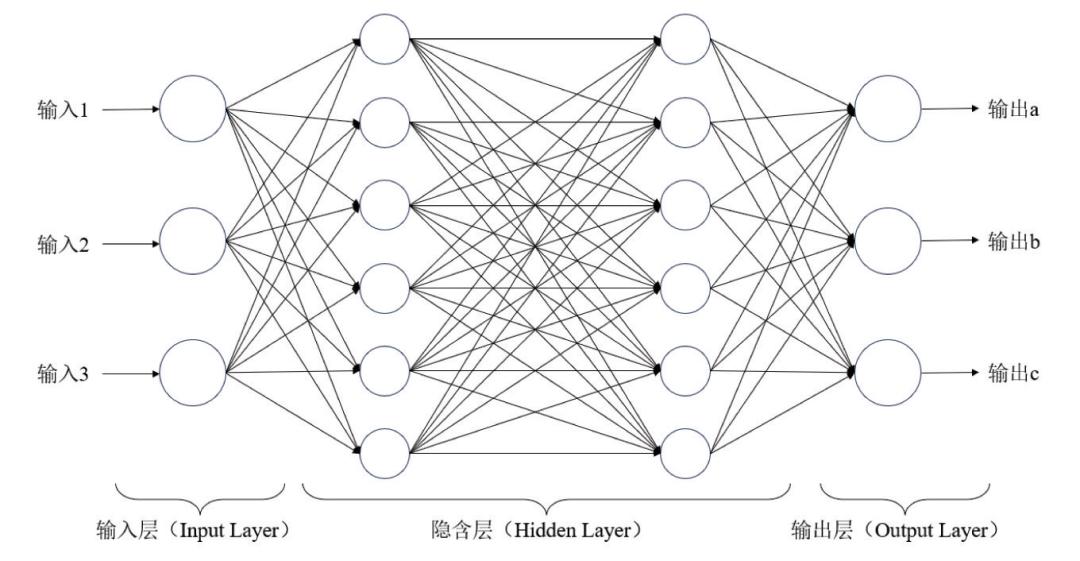
Fig. 1 artificial intelligence neural network model diagram

The model includes three basic structures: input layer, hidden layer and output layer, and information propagates in one direction in the model. The number of hidden layers can be expanded indefinitely, and each layer is connected by neurons. The intelligence of artificial intelligence depends on the number of nerves and the number of hidden layers. In the actual activities of artificial intelligence referee, artificial intelligence will ask the examinee’s age, family situation, beliefs, values, specific actions, etc., comprehensively consider the relevant factors, and calculate by function discriminant. Because different scholars adopt different natural language processing technologies and models, there are different accuracies accordingly. For example, Ahmad based on hybrid deep neural network (CNN+BiLSTM) predicted the judgment of judicial cases, and the accuracy of the hybrid model reached 91.52%. Kowsrihawat uses End-to-End deep learning neural network to predict judicial decisions, and its accuracy is 74.38%.

The use of information by human beings is complicated, and human beings may repeatedly use certain information to make judgments, or reflect on their own judgment activities through the judgment results. The error back propagation of neural network is simulating the feedback mechanism of human brain. If the actual judgment of artificial intelligence is not in good agreement with the result of the input case, the system will trigger its own "back propagation algorithm" to adjust the connection weight between the calculation units in the system, so that the output given by the system can be different from the previous output. Then, the system compares again. If the coincidence between the two is still not good, the system starts the back propagation algorithm again until the actual output and the ideal output are consistent with each other. It is worth mentioning that algorithmic discrimination is produced in repeated "feedback". More importantly, the existence of feedback chain makes the structure of neural network more and more complex and unknowable. For neural networks with dozens or even hundreds of layers, including tens of thousands of neural nodes, coupled with the self-learning mode of artificial intelligence, it is difficult for even designers to accurately understand how the parameters of each node in each layer are formed and what functions they represent. Compared with the algorithm designers who don’t disclose the content of the algorithm on the grounds of trade secrets, the "algorithm black box" produced by deep learning of artificial intelligence more strongly tortures the instinct of human beings to expect justice.

Third, how do artificial intelligence referees face "rationality"

Legal scholars who are committed to AI judicial research are optimistic about the deep learning ability of artificial intelligence, ignoring the question of whether the artificial intelligence referee itself can "apply justice". Even if artificial intelligence has the ability to accurately predict the results of judicial decisions, it shows better computing power than the human brain, which does not prove that artificial intelligence is enough to replace judges to undertake judicial decisions. The Supreme People’s Court put forward the requirements of "clarifying the facts, explaining the jurisprudence, explaining the reason and paying attention to the arts and sciences" for the interpretation and reasoning of judgment documents. The author will take "sense" as an example to discuss how artificial intelligence judges interpret "sense" and whether they can "explain sense".

(1)

How does artificial intelligence interpret the "sense" in the referee

In the theory of law, the concept of "sense" has rich connotations, which refers to the universal value criterion obtained by integrating emotional experience into the interaction process of social members. From the origin, reason originates from the instinctive feelings of animals, and is seen above feelings; From the perspective of substantive origin, reason exists in the general social order and is expected to be discovered by judicial workers in the case. From the perspective of judicial application, reason can be universally proved and used as the basis of quasi-judgment. Therefore, "sense" has both emotional attributes and factual and normative features.

In judicial practice, the judge will either turn it into natural feelings such as filial piety and love, or turn it into the truth of things, or turn it into the public opinion. A human judge must face a large number of cases before he can have a deeper understanding of "sense". Artificial intelligence has the ability to interpret "sense" based on the rapidity and repeatability of learning.

The core of understanding reason lies in the processing of natural language text by artificial intelligence. The essential feature of natural language is the internal computing mechanism, which produces unbounded structured phrases and sentence arrays. This shows that the expression of natural language is not chaotic, which provides the possibility for artificial intelligence to understand language. Because the real natural language is extremely complex, it cannot be directly processed by artificial intelligence. Scholars try to formalize the natural language and establish a "formal model" of the language, so that it can be expressed strictly and regularly in a certain mathematical form, and these texts are processed and analyzed by artificial intelligence.

For example, if the author inputs the content of a judgment document "but the statements before and after it are found in different places, and its explanation is unreasonable", artificial intelligence will first "segment" the words received. When it is found that "Chen" and "statement" in the sentence library are both "statements" with great probability, artificial intelligence will judge "statement" as a phrase, and other word segmentation processes will be the same. Secondly, artificial intelligence carries out part-of-speech tagging (tagging nouns, verbs, adjectives, etc.) and syntactic analysis (analyzing the subject, predicate, object, etc.) of the divided words. Thirdly, artificial intelligence will try to "semantically analyze" the text, and this activity is completed with the help of one or more models.

Artificial intelligence knows what it is dealing with, but it can’t really "know" like humans. In fact, the interpretation of the text of sense by artificial intelligence depends on the interpretation of sense by algorithm developers. Although different people have different understandings of sense, sense can be roughly disassembled into natural emotions, facts, people’s feelings and public opinions, etc. In essence, the understanding of sense by artificial intelligence is to give these elements weight (contribution distribution), and then feedback the difference of training results to neurons at all levels through error back propagation, give them revised weights, and repeat the process. (as shown in Figure 2) However, artificial intelligence can’t judge what sense is in the initial state, and the characteristics of sense are normative, which requires that the sense in the materials must be legal, and the interpretation of sense by non-judicial professionals will dispel the norm of sense. In addition, some judges rigidly apply legal logic and legal norms, which deviates from reason in judicial decisions. If the input of materials is not discriminated, artificial intelligence will recognize all the recognized input contents as true, which deviates from the correct track of understanding reason. In addition, R&D personnel can also observe the training process of artificial intelligence, and set and add new elements and weights.
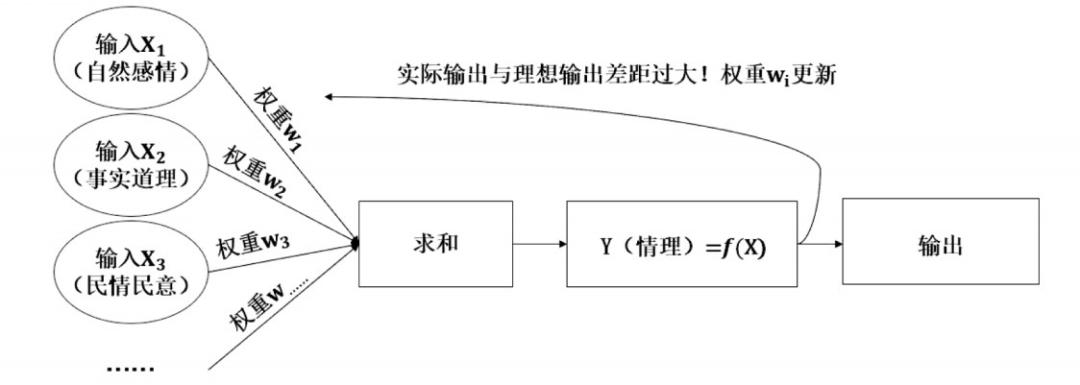
Fig. 2 Schematic diagram of artificial intelligence interpreting "sense"

It is worth noting that the relationship between the elements of reason and reason is not limited to (x, y) point pairs, but (x, y) generalized point pairs composed of vectors and matrices. On the one hand, human beings are rich in emotions, which not only include affection, love, friendship, etc., but also produce different emotional contents such as emotions, joys and sorrows. For example, the relationship of "love" will not only lead to the love concept of "mutual help", but also easily lead to wrong behavior by love and hate; On the other hand. Social relations are quite complicated, and there may be two or more reasons in the same case that have conflicting effects on the verdict. For example, in the case of "driver’s injury to fellow passengers during the period of good intentions", the court’s application of reason not only considered the moral concept of "promoting helping others", but also included the fair requirement of "the injurer making up for the loss". Artificial intelligence must use multi-layer composite function and interpret reason with neural network model.

(2)

Can artificial intelligence use "sense" in referee?

The application of reason in judicial trial activities is mainly to evaluate facts or evidence. It can be inferred that reason often plays an auxiliary role in judicial operation and is not the direct basis for judges’ trial. Therefore, artificial intelligence can not explain its application or explain the reason by accurately predicting the outcome of the case. The author believes that there is a logical fracture between the construction of artificial intelligence model to understand reason and the application of reason in judicial activities. Combined with the process of interpreting reason by artificial intelligence, the author thinks that there are several technical reasons why artificial intelligence can’t use reason:

First, there are few samples for training artificial intelligence, which can’t help artificial intelligence to deeply understand and use reason. On the one hand, artificial intelligence simulates the use of reason by judges, which requires rich case materials. For example, when Al-Kofahi built an artificial intelligence system to extract and process court opinions and learn by himself, it recorded about 7 million cases in the database. When Spaeth et al. predicted the verdict of the Supreme Court, their data were based on all the judgments of the justices. However, the author uses "sense" as the key word of full-text retrieval on the online judgment documents. From 2012 to 2022, "sense" only appeared 145,799 times, which is far from enough as a training model. Some judges judge according to reason but don’t say the word "reason", and artificial intelligence can’t judge whether the judge has considered reason. For example, criminal judgment in the "Yu Deshui case" was praised by the media as "the most temperate judgment". The judge explained why the defendant Yu Deshui was given a lighter punishment with a superb grasp of reason, but the word reason was not included in the judgment.

On the other hand, it is common for judicial decisions to be unreasonable. The judge’s judgment lacks the support of the law of reason, and there are cases such as arbitrary law, ignoring common sense in argument, and simple and rude legal explanation; Or follow the principle of "rather simple than complicated", fearing that if you talk too much, you will lose, and others will seize the handle; Or there is no incentive for judges to reason because of system differences; There are even judges who know that bending the law has made a wrong judgment when it is unreasonable. The existence of such judgment documents has a negative effect on the interpretation and application of reason by artificial intelligence.

Then, can we use the data generated by artificial intelligence to train the prediction ability of artificial intelligence to solve the problem of insufficient referee samples? Shumailov found that this kind of training method with left foot and right foot is a kind of "curse recursion", which will make artificial intelligence "forget" the original data and cause the model to collapse, which also means that the data created by human beings can have the value of training artificial intelligence.

Secondly, the complexity of the meaning of reason and the particularity of the applicable field deepen the difficulty of case materials digitization. In some cases, the interweaving of multiple emotions complicates the case, which is difficult to be expressed by numbers, and the interpretation of case materials by artificial intelligence must be in mathematical form. According to the book "A Tortoise in a Broken Prison", two brothers both thought that a child was their own son, and Huang Ba, the county magistrate, let two sisters-in-law "compete for it". The child’s biological mother was afraid of hurting the child, so she didn’t dare to snatch it vigorously. This requires that in the trial process, we should not only consider the feelings of "the mother is afraid of her child being injured and does not dare to snatch it vigorously", but also balance the feelings of "the mother has to snatch her child for fear of losing her child under the order of competition". There are also many reasons that exist in the same case, and the case of "driver’s injury to fellow passengers during good intentions sharing" mentioned by the author is such a case.

Thirdly, the entanglement between reason and jurisprudence in judicial adjudication makes it more difficult for artificial intelligence to understand and apply reason. Generally speaking, there is a complex relationship between jurisprudence and reason. On the one hand, reason and jurisprudence are both external and internal, and complement each other. The stipulation of law should be found from the reason of daily social communication, and the reason in life is determined by law. On the other hand, the purpose of rationality is to adjust or restore the original social relations. Jurisprudence is characterized by formal rationality and achieves the effect of settling disputes through the logical application of legal norms. They are closely related, but they have different purposes. In the case of contradiction between jurisprudence and reason, how to balance the relationship between reason and jurisprudence, or use reason to choose jurisprudence, has higher professional requirements for judges. In the view of artificial intelligence, it is only a matter of probability to choose which angle to recognize and discuss, and it has no practical significance. Perhaps the algorithm designer has set a certain understanding and discussion angle for artificial intelligence, or artificial intelligence itself takes the judgment result of a case as the basis for measuring the "value" text, but this will easily lead to artificial intelligence-based mechanical justice. It is not only impossible to integrate jurisprudence and reason in the judgment, but also impossible to achieve case justice.

One possible solution is to use a set of argumentation forms to create an argumentation diagram for each input case, expecting artificial intelligence to conduct legal reasoning based on real cases in the database. However, the shortcomings of this method are also obvious, or all possibilities are exhausted in the process of creating the demonstration diagram, which will produce tens of thousands of artificial heavy work, or the evaluation of prediction performance is not strict statistically because of insufficient training base. A stricter rebuttal to this way is that the judicial trial can find supporting reasons without precedent or even outside the legal provisions, while artificial intelligence can only find supporting reasons in the entered provisions and cases. The judge’s interpretation of legal norms is not only based on the text content, but also adopts various interpretation methods that are not based on the provisions themselves, such as purpose interpretation and historical interpretation, in order to seek the connotation concept of fairness and justice in legal norms.

Fourth, philosophical reflection on the use of "sense" disability

The use of "reason" in artificial intelligence is disabled, which contains a deep refutation of the philosophical view that artificial intelligence does not have self-awareness. Although philosophy can’t answer how the algorithm should be designed, how to define "intelligence", how to conceive experiments to refute theoretical assumptions, and how artificial intelligence research depends on philosophy’s understanding of mind provide the possibility for philosophical discussion of artificial intelligence.

(1)

A fundamental refutation of disability by using reason.

Although the author has proved that artificial intelligence can not be used rationally, the above proof is only a defect of artificial intelligence’s technical application rationally. Reflecting on "sense" from a philosophical perspective will fundamentally refute the possibility of artificial intelligence using sense. In our country, the understanding of "sense" is often divided into "emotion+reason" mode. On the whole, the discourse system of "sense" includes moral order and emphasizes the reality and particularity of things, and "reasonable" means the combination of the above two factors.

For artificial intelligence, if artificial intelligence embodies the usage of "sense" in the output content, it is not superficially different from human beings in "understanding" the meaning of sense. Churchland believes that the human brain will not constitute a theory or legal system of distributive justice, but at most it can only constitute a theory about how we produce, embody and apply these valuable cognitive achievements. In this regard, he conceived a neural network model that leads to cognition from the field of meta-ethics.

There are three steps to train the model: first, all the underlying descriptions of human behavior are fuzzified and input into the neural network, and the weights of nodes are adjusted. This process simulates that adults constantly understand their social and moral environment through perceptual skills; Second, divide the abstract space on the neural layer and divide it into a set of hierarchical categories in some proprietary neuron layers, such as "morally important" and "morally unimportant" behaviors; Thirdly, determine the position of each stimulated behavior point in the space. These structured spaces constitute acquired knowledge of the social space structure and how to effectively control the social space. (See Figure 3)
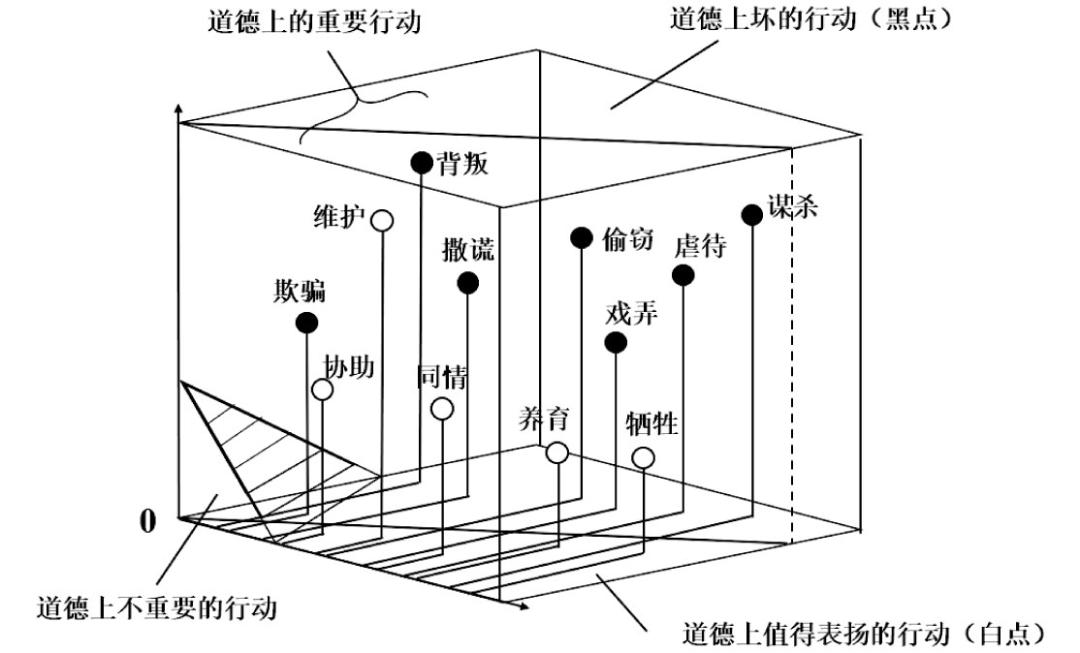
Fig. 3 vector space of moral identification envisaged by Churchland

Moral cognition and reason in Churchland model are similar, but there will be philosophical difficulties if we try to put reason into Churchland model. Artificial intelligence tries to generalize the scattered case data into a higher-level function of y=f(x), but the sense is often found outside the material. The wording of this quotation does not obviously bring a higher level of value evaluation, but it is also combined with historical facts and belongs to the special expression of "one thing, one word" "One thing, one word" does not have a digital standard that can blur the content, which also makes the reason unable to be digitized.

There is also a complex expression of "sense" in the form of "metaphor", which requires scholars to understand sense in a higher context without events. However, artificial intelligence is constructed by human beings, and it cannot jump out of the input knowledge range or program content to deeply understand reason. In the context of China, there is a methodological violation between the practice of commenting on characters through historical analogy and the inductive judgment of artificial intelligence. This is enough to show that reason has irreducibility of language and value in original materials and cannot be accepted by artificial intelligence.

(2)

Lack of "self-awareness" in artificial intelligence

Searle conceived a "Chinese room" to refute the existence of "self-awareness" of artificial intelligence. Even if people in the room don’t understand Chinese, they can provide answers to people outside the room through dictionary reference and rule guidance. Searle pointed out that the calculation activities of artificial intelligence are only carried out according to the designed program, and they don’t understand what they are dealing with. The author agrees with Searle’s point of view, and must also admit that a perfect operation model is mainly attributed to the fuzzy processing of data by human experts, and confirms the specific kind of mapping relationship between input information and target information through one or more groups of (x, y) point pairs.

Confirming the mapping relationship requires a lot of data checking. Experienced designers have a more accurate "want to understand" the mathematical formula model describing the (x, y) point pair. The designer takes out the formula and then uses the real data to correct the parameters in the mathematical formula. The essence of this process is to get the appropriate answer through trial and error. Xu Yingjin described it as a process of "foreign apprentices learning Kung Fu from Master China", and the learning of artificial intelligence is to "guess" by virtue of its powerful computing power until it guesses the correct answer that meets this condition.

It can be seen that the learning process of artificial intelligence is very clumsy, and the reason why humans ignore this clumsy learning method lies in the powerful data processing ability of computers. The richer the data or the more complex the model, the higher the requirement for computing power. The reason why the results produced by clumsy learning exceed the accuracy of human experts is precisely based on the high-quality samples provided by a large number of human experts. Artificial intelligence clumsily learns only what it knows, but it doesn’t know why. They only make a fuss about the processing of information on the surface. For example, AI painting, which is popular recently, is still the result of program calculation in essence. Artificial intelligence itself does not have the material for painting, nor does it know what kind of painting can be drawn by its own program operation, not to mention how artificial intelligence can know where this pen should fall when painting.

This situation will lead to another discussion about artificial intelligence, that is, does artificial intelligence have "self-awareness"? Farina believes that the existence of self-awareness in artificial intelligence is based on the fact that artificial intelligence has a minimum "self". However, the justification strategy of academic circles (especially science and engineering) often deviates from this proposition, and regards the behavior selection mechanism of artificial intelligence according to the procedure as the minimum self of artificial intelligence.

There are many such "self-consciousness-subject models" in academic circles, such as CPS(Cyber-PhysicalSystems) model constructed by Dutt et al., which can perceive the environment, analyze and make decisions, and achieve the desired goals within the procedural constraints. Selitskiy made an ANN model of meta-learning supervisor to adjust itself more accurately in the wrong cases of face recognition and facial expression recognition, and so on.

The author thinks that these models are good and play an important role in practice. However, there are still two criticisms about this activity: first, the learning mechanism of artificial intelligence is completely input by the designer, but it is hard for the author to imagine that the learning process of human beings in society-even in an ideal society-is also controlled by a learning mechanism set by the "creator". This actually disproves the perspective positioning of artificial intelligence "He Me". Secondly, on the surface, the actions of artificial intelligence make corresponding behaviors according to environmental changes. In essence, the actions of artificial intelligence completely trigger and run the program that selects the action after meeting certain environmental conditions, and there is still no self-awareness under self-selection.

In this way, artificial intelligence does not have the ability of self-awareness and self-cognition. All its actions are based on pre-written programs, and even deep learning is nothing more than simulating the existing learning process of human beings. The sign that "intelligence" is "intelligence" is that those who are worthy of being called "intelligence" can make creative contributions in areas that have not been fully set foot in by predecessors.

conclusion

The purpose of things determines the structure of things. If the sole purpose of artificial intelligence judgment is not to generate judgment results, artificial intelligence may not face many accusations from the author in this paper. Artificial intelligence can’t carry human emotions, values and other humanistic resources, which means that artificial intelligence should be in an auxiliary position in judicial activities. Human beings have "intelligence" that artificial intelligence does not have. How to make good use of human intelligence to balance the growing needs of a better life is the source of the long-term development of artificial intelligence.
Wonderful review of the past

Zhu Qinghua, Song Shanshan | The judicial application path of generative artificial intelligence from the perspective of risk | The copyright determination of generative artificial intelligence works | Liu Shu | The realistic landing and future exploration of |LLM-type generative artificial intelligence in smart courts | The relationship between guiding cases and judicial interpretation and the interactive path | Kun Li | The boundary between the crime of helping a letter, the crime of concealing secrets and the crime of fraud | On the nature and structure of the debtor’s right to refuse to pay when the performance cost is too high.

Official website, Shanghai Law Society

http://www.sls.org.cn

Keep sliding to see the next one.

Zhu Haochuan and Chen Zhijia | On the Rational Application of Generative Artificial Intelligence Referees Original Zhu Haochuan and Chen Zhijia Touch the Oriental Law of Shanghai Law Society to read the original text

Shanghai Law Society Oriental Law Praise Sharing is reading and writing a message, sliding up to see the next one.

Original title: "Zhu Haochuan and Chen Zhijia | On the Problem of Rational Application of Generative Artificial Intelligence Judgment"

The format of delivery film is unknown, which order comes first, watermark-free film and final payment? (medium-length)

[Original] Text/Xi Yan

During the performance of the contract, Party A paid the first three production fees according to the contract. On March 1, 2019, Party B sent a WeChat to Party A, with the content that all the work has been completed. According to the industry practice, the final payment needs to be paid first for copying films, so you can watch films in Party B’s computer room or provide a low-quality watermark version to Party A.. A means that watermarking is understandable, but the low quality is incomprehensible. The low quality of B reply is only relative to the template, and it is also a high-definition version. On March 4th, 2019, Party A received the watermark and H264 format production results provided by Party B..

After that, Party A urged Party B for the final format agreed in the contract, and Party B insisted that the final payment of the fourth installment should be paid first, otherwise, Party A had the right to refuse to deliver the final piece. Both sides insisted on each other and finally reached a lawsuit.

Based on the analysis of the contents of the contract and the communication process between the two parties, we can see that:

First of all, there is no direct contract basis for both sides’ claims and insistence, but the basis of A’s viewpoint is more fragile, and both sides make requests beyond the scope of the contract.

Secondly, since there is no agreement in the contract and it is involved in the performance and must be solved, it is necessary to fill the contract loopholes. Article 61 of the original Contract Law of our country stipulates, "After the contract comes into effect, if the parties have not agreed on the quality, price or remuneration, place of performance, etc., or the agreement is unclear, they can supplement it by agreement; If a supplementary agreement cannot be reached, it shall be determined in accordance with the relevant provisions of the contract or trading habits. " There is no agreement in the contract on how to perform the contract from the completion of the work content to the delivery of the final format, and there is no agreement on the delivery form of the work content. At this time, it should be settled by both parties through consultation. In fact, both parties sign a supplementary agreement.

Thirdly, in fact, both sides consciously followed this procedure. Party B took the lead in making a proposal to Party A, which has the nature of an offer, and its content includes two parts: first, it is clear that the final payment should be settled after copying into pieces, and this rule exists as an industry habit; Second, there are two ways to review the film before the final payment is settled. Party A can first deliver the film with watermark or directly review the film at the site of Party B.. However, A’s reply and reaction to B’s suggestion includes two contents: it is understandable to add watermark, and a piece with watermark version has been received. This shows that Party A recognizes the industry practice proposed by Party B, and also agrees with Party B’s suggestion to submit a watermarked version first.

Furthermore, after the process of offer and acceptance, the two sides reached a new agreement, which is also a supplementary opinion on this matter. Its content should be: based on the industry practice that the final payment needs to be paid first for copying into pieces, Party B will first deliver the watermarked version to Party A for acceptance, and then Party A will pay the final payment after verification, and after receiving the final payment, Party B will deliver the pieces in the final format. The supplementary agreement is also an integral part of the contract and is binding on both parties, and both parties should strictly abide by it. After Party A received the film with watermark version from Party B, it recognized the quality of the film. At this time, Party A should pay the final payment of the fourth installment first, which is the requirement of fulfilling its obligations under the supplementary agreement. However, Party A directly requested Party B to deliver the film in the final format without paying the final payment, and Party B has the right to refuse based on the right of defense. In this case, there is no contractual basis for Party A’s request, and there is legal basis for Party B’s refusal.

To take a step back, even if the two sides fail to negotiate on this, Party A insists on not accepting Party B’s proposal and overturning its previous statement, and no supplementary agreement has been formed between the two sides, but according to the trading habits, the above conclusion can still be drawn. According to Article 61 of the original Contract Law, if the parties fail to reach a supplementary agreement, it shall be handled in accordance with the relevant provisions of the contract or trading habits. Because there are no other terms in the contract for reference, or even if there is no direct applicable relationship, the performance problem cannot be solved through the contract itself. Therefore, we should choose the second path, that is, the way of trading habits to break through, and it happens that there are industry practices in post-production, and the parties clearly put forward the industry practices as the basis in their performance.

The source of civil law in China is divided into two levels: one is law, and the other is custom. "Handling civil disputes shall be in accordance with the law; If there are no provisions in the law, customs can be applied, but they must not violate public order and good customs (Article 10 of the Civil Code). " Trading habits in the field of contract law include the following two items: (1) practices that are usually adopted in the local trading behavior or in a certain field or industry and are known or should be known when concluding a contract for the counterparty; (2) Customary practices frequently used by both parties. The first two items shall not violate the mandatory provisions of laws and administrative regulations. In this case, the final payment should be settled before the copy proposed by B, which should belong to the rules in the film post-production industry. For this rule, after B proposed it, Party A did not object, which can be regarded as its default, indicating that it also knows the existence of this rule. Therefore, even if there is no contract and law as the basis, the application of trading habits can solve the disputes between the two sides.

When the M8 renderings are exposed, the family design is younger, or it is a new choice of 400,000.

Recently, the product line dynamics of Wenjie Automobile have attracted market attention. Although no brand-new models have been launched this year, only relying on three models on sale-the flagship SUV M9 and the slightly improved M5 and M7, Wenjie still achieved good sales results in the market, with monthly sales stable at more than 30,000 vehicles, which is particularly eye-catching without the support of preferential policies.

Looking back on the past, M9, as the flagship model in the world, has won the favor of consumers with its excellent design and performance since it was launched at the end of last year. In March of this year, M9 officially started delivery, further consolidating its position in the luxury SUV market. Although M5 and M7 have not changed much, they still maintain stable sales by virtue of brand reputation and accumulated user base.

However, the world of inquiry did not stop there. It is revealed that a number of new cars will be unveiled in the world next year, including M5 and M7, which have been replaced or greatly redesigned, and M8, a brand-new medium and large SUV model. For this highly anticipated new car, some bloggers drew the renderings based on spy photos and other information, revealing the preliminary design of M8.

From the renderings, the design style of Wenjie M8 is similar to that of M9, but the details are more distinctive. The front face adopts a flailing design, with chrome trim on the top and ultra-fine daytime running light strip on the bottom, which complements the digital smart headlights and shows the family design style. In terms of body size, M8 is more compact than M9, with a length of about 5 meters. It is expected that the same "star-picking" door handle as Zunjie will be adopted. This design did not appear on M9.

In terms of tail shape, M8 and M9 are slightly different, mainly reflected in the lamp type. M8 also adopts the shape of flat top and folded bottom, with chrome-plated strip on the top and red outline lamp on the bottom, and the overall design is simple and generous.

The details of M8 are also more refined. For example, the body lines are smooth and the roof is suspended, which enhances the sense of movement. As for the interior, although the specific details have not been announced yet, it is expected to maintain a similar sense of luxury and technology with M9.

In terms of market positioning, M8 will fill the gap in the price range of 350,000-450,000. At present, in this price range on the market, the ideal L9 and other models perform well, and the launch of the M8 will undoubtedly intensify the competition in this market. It is estimated that the price of M8 will be around 400,000 yuan to attract more young consumers.

For the world, the launch of M8 will not only enrich its product line, but also enhance the brand’s competitiveness in the luxury SUV market. With the appearance of a number of new cars next year, the world is expected to achieve even better results in the market.

Natural sunshine is deeply rooted in the field of health, and it is on the list of the top 100 global direct selling enterprises in 2024.

DSN, the American direct selling news network, recently released the list of the top 100 global direct selling companies in 2024. The list includes 58 direct selling companies with revenues of more than 100 million US dollars in 2023. These companies come from 16 countries and regions, and they are well known for their natural sunshine.

DSN Top 100 Global Direct Selling Companies list provides a unique perspective for studying the global impact of direct selling on economic and social fields. It not only provides opportunities for those who seek opportunities in the industry to learn from each other, but also provides useful data-driven insights for researchers, investors and entrepreneurs. Most of the companies on the list have strong comprehensive strength in the industry and high recognition in the hearts of consumers.

It is understood that Natural Sunshine has consistently introduced products that meet the needs of consumers, built six matrices of intestinal nutrition products, including dietary fiber, probiotics, prebiotics, synbiotics, metazoans and phytonutrients, and launched a series of specialized intestinal health management products to meet the nutritional supplement needs of different consumers. The products such as Qianjue Baimei TM metazoan tablet candy, Hanfang Puling tea solid beverage, and empowerment nutrition package are deeply loved by consumers.

In the metabolic management based on intestinal microecology, natural sunshine has many years of experience, and it has been transformed into its own advantages through high-tech research and development and innovation, laying its own leading position in the industry. Guided by the concept of serious nutrition, natural sunshine will continue to be developed based on "metabolic management of intestinal microecology", and continue to introduce products and services that meet the health needs of consumers, injecting new natural vitality into the revolutionary upgrading of domestic big health industry.

Natural sunshine has been deeply involved in the field of health for decades, and combined with its own development experience, it has put forward the strategy of "serious nutrition", focusing on the scientific layout of four directions: selecting raw materials, adding enough, scientific matching and efficacy verification. Through "combination of learning and research, clinical demonstration and high-quality obsessive-compulsive disorder", it has brought health benefits to every consumer, and helped the national health with the product quality of "eating somatosensory and eating healthy", leading the development track of healthy nutrition.

Over the years, natural sunshine has carved "combination of learning and research, clinical demonstration and high-quality obsessive-compulsive disorder" into the company’s development DNA. In the future, Natural Sunshine will further strengthen scientific research cooperation and exchanges with major scientific research institutes, top universities, associations and authoritative experts in China, adhere to scientific research and clinical trials, optimize the full-link experience of products, and provide consumers with good products that are "healthy and healthy". "

What is the significance of the goal that "beauty" must achieve to become a socialist modern power?

  Bantuan Village, Qiaoshan Township, Luocheng Mulao Autonomous County, Hechi City, Guangxi Province, golden rice fields, beautiful buildings, neat fish ponds and verdant bamboo forests complement each other, forming a beautiful ecological pastoral picture in autumn. Photo by Xie Shunheng (People’s Vision)

  Editor’s Note: The 19th National Congress of the Communist Party of China defined the goal of "building a prosperous, strong, democratic, civilized, harmonious and beautiful socialist modernization power", incorporated "upholding the harmonious coexistence between man and nature" into the basic strategy of upholding and developing Socialism with Chinese characteristics in the new era, and pointed out that "building ecological civilization is a Millennium plan for the sustainable development of the Chinese nation". The construction of ecological civilization has reached a new height, with a clear timetable and a clear road map. The beautiful China with clear water, blue sky and fresh air is full of expectations.

  What are the highlights of building an ecological civilization and a beautiful China in the report of the 19th National Congress? How to overcome difficulties, roll up our sleeves and work hard in the next step, and make our generation’s efforts to protect the ecological environment? Our reporter interviewed many experts, scholars and grassroots cadres and masses, asking them to talk about understanding, experience, truth and good advice.

  "In the report of the 19th National Congress of the Communist Party of China, the content related to the construction of ecological civilization is very large and heavy. Energy, environment and climate change workers are very concerned and very excited! " Du Xiangwan, deputy director of the Expert Advisory Committee of the National Energy Commission, director of the National Expert Committee on Climate Change and academician of the China Academy of Engineering, told reporters.

  "Insist on the harmonious coexistence between man and nature", "Building ecological civilization is a Millennium plan for the sustainable development of the Chinese nation", "We must establish and practice Lucid waters and lush mountains are invaluable assets’s concept and adhere to the basic national policy of saving resources and protecting the environment" and "Accelerate the reform of ecological civilization system and build a beautiful China" … … The 19th National Congress of the Communist Party of China’s plans for building an ecological civilization and a beautiful China in the new era have attracted wide attention and heated discussion at home and abroad in recent days.

  Understanding the importance of ecological civilization construction from the transformation of social principal contradictions

  "Socialism with Chinese characteristics has entered a new era, and the main contradiction in our society has been transformed into the contradiction between the people’s growing needs for a better life and the development with insufficient imbalance." The 19th National Congress made clear the historical changes of the main social contradictions in China, and party constitution made corresponding amendments according to this important political conclusion.

  In 1956, the Eighth National Congress of the Communist Party of China put forward that the main contradiction in our society is the contradiction between the people’s need for rapid economic and cultural development and the current situation that the economy and culture can not meet the people’s needs. The Sixth Plenary Session of the Eleventh Central Committee of the Party held in 1981 defined the principal social contradiction in the primary stage of socialism as "the contradiction between the people’s growing material and cultural needs and backward social production". This judgment has been used until the 19th National Congress for more than 60 years.

  Chang Jiwen, deputy director of the Institute of Resources and Environmental Policy of the State Council Development Research Center, said that the major political conclusion made by the 19th National Congress on the transformation of major social contradictions in the new era is of far-reaching significance for promoting the construction of ecological civilization.

  Since the reform and opening up, China’s economy has developed rapidly, creating a "China miracle". However, the extensive development mode has also made China pay a heavy price in terms of resources and environment, and accumulated a large number of ecological and environmental problems. The ecological environment has become a shortcoming of national development and a pain point of people’s lives.

  In the past five years, China has vigorously promoted the construction of ecological civilization and achieved remarkable results that have attracted worldwide attention. However, the construction of ecological civilization still has a long way to go, and there is still an overall shortage of high-quality ecological products. People urgently call for fresh air and green mountains and green waters. In many places, people used to look forward to food and clothing and survival, but now they look forward to environmental protection and ecology.

  "The major political judgment on the transformation of the main contradictions in our society has further deepened our understanding of the construction of ecological civilization. This can be understood from the following aspects. " Chang Jiwen believes that "First, the people’s growing needs for a better life include expectations for a better ecological environment; Second, the emergence of environmental problems, the fundamental reason is uneven and inadequate development; Third, the solution of environmental problems still depends on balanced development and full development. The great judgment and deployment of the report of the 19th National Congress on the status quo, causes and solutions of ecological and environmental problems is the fundamental follow-up and action guide for building a beautiful China with sky blue, green land and clear water. "

  Chang Jiwen said that the formulation and implementation of the national strategy must be based on the major social contradictions. If the positioning of contradictions is not in line with reality, the action strategy and its deployment may be biased. A profound understanding and understanding of the changes in the main social contradictions in China will help us to make overall consideration and properly solve problems such as environmental pollution, ecological destruction and resource shortage in the overall development. Next, Party committees and governments at all levels will pay more attention to the construction of ecological civilization and beautiful China, and take greater steps in promoting green development, solving outstanding environmental problems, protecting ecosystems, and reforming the ecological environment supervision system.

  "Beauty" has become the goal that a socialist modernization power must achieve.

  On the basis of seeking truth from facts and scientifically judging the main social contradictions, the 19th National Congress made a strategic arrangement for the development of Socialism with Chinese characteristics in the new era, and established "adhering to the harmonious coexistence between man and nature" as one of the basic strategies for adhering to and developing Socialism with Chinese characteristics in the new era. According to this blueprint, by 2035, socialist modernization will be basically realized, the ecological environment will be fundamentally improved, and the goal of beautiful China will be basically realized; By the middle of this century, a prosperous, strong, democratic, civilized, harmonious and beautiful socialist modernization power will be built, and the ecological civilization will be comprehensively improved. The 19th National Congress of the Communist Party of China (CPC) solved the ecological and environmental problems and clearly incorporated them into the strategic development goals of the Party and the country.

  Du Xiangwan said: "The ‘ Beauty ’ The word is of great significance. ‘ Beautiful China ’ It has become a necessary condition for China to achieve its goals by 2035 and 2050, and it has become an indispensable content. The construction of ecological civilization has further clarified the strategic direction and goals. "

  “‘ Beauty ’ Covering a very wide range and demanding, it is an urgent need to meet people’s needs and achieve sustainable development. The 19 th National Congress put forward new and higher requirements in the construction of ecological civilization, which is conducive to eliminating backward production capacity, developing green and low-carbon industries, and adding new impetus to economic growth and national development. " Du Xiangwan said, "In the next few decades, China’s economic development will not only increase the total amount, but also greatly improve the quality and efficiency of development."

  Academician Shen Guofang, an academician of China Academy of Engineering and an expert in forestry and ecology, said: "‘ Beauty ’ Must be based on the excellent ecological environment, with ‘ Beauty ’ As the goal that a socialist modernization power must achieve, it puts forward higher requirements for ecological civilization construction and greening standards. In 1955, President Mao Zedong issued ‘ Greening the motherland ’ ‘ Implement landscape gardening ’ The call. ‘ Landscaping of the earth ’ At that time, there were no economic conditions and it was impossible. Now, the country’s economic strength has undergone earth-shaking changes, and forestry and gardening will have greater development. "

  "Beautiful China not only has better environmental quality of air, water and soil, but also better landscape, and the construction of ecological civilization has been overweight, which has put forward higher requirements for a series of work." Shen Guofang said.

  Shen Guofang pointed out that solving ecological and environmental problems ultimately depends on high-quality and high-efficiency development. For example, at present, the national and local ecological compensation for public welfare forests varies greatly from region to region, with many provinces ranging from 40 to mdash; One acre in 60 yuan, 10 provinces with less & mdash; One acre in 15 yuan. If the development is unbalanced and insufficient, it is impossible to achieve sufficient and reasonable ecological compensation.

  The specific task list of ecological civilization construction in the new era is given.

  The 19th National Congress not only drew a grand blueprint for beautiful China, but also integrated the concept of green development into all aspects of socialist modernization, and gave a list of specific tasks for ecological civilization construction in the new era.

  The report called for "strengthening solid waste and garbage disposal", which was the first time that this issue was mentioned in the report of the Party Congress, and Du Xiangwan took note of it. He said: "I think this is a hurdle for China’s modernization, and this move meets the requirements of the times and the people. Dealing with the garbage problem well, some developed countries and regions are ahead of us at present, which is one of the signs of a country’s modernization and an element of beautiful China. Garbage siege, garbage village, where is the beautiful China? "

  Wang Wenbiao, member of the Standing Committee of Chinese People’s Political Consultative Conference, Party Secretary and Chairman of Yili Resources Group, listened carefully to the report of the 19th National Congress and was encouraged. "The report mentioned that ‘ Construct an environmental governance system with the government as the leading factor, enterprises as the main body, social organizations and the public as the participants. ’ The Kubuqi model we explored in Kubuqi’s comprehensive desert control is just like this: government policy support, enterprise industrialization investment, and market participation of farmers and herdsmen. "

  In September this year, the United Nations Environment Programme released the Ecological Wealth Assessment Report of Kubuqi in China in Erdos, Inner Mongolia, which is the first ecological wealth report officially released by the United Nations in the world, and affirmed China’s achievements in ecological civilization construction with scientific and quantitative evaluation results. The report shows that Kubuqi Desert has restored 9.69 million mu of green desert and created ecological wealth of more than 500 billion yuan. Wang Wenbiao emphasized: "The creation of this ecological wealth is attributed to ‘ Lucid waters and lush mountains are invaluable assets ’ The important concept is also a vivid example of this concept benefiting China and affecting the world. "

  "After studying the report of the 19 th National Congress, I feel that we are on the right track, reassured, and more confident to continue desert control and promote successful practice according to local conditions." Wang Wenbiao said.

  The report of the 19th National Congress of the Communist Party of China proposed to raise pollution discharge standards and strengthen the responsibility of polluters. Resolutely stop and punish acts that damage the ecological environment. Zhang Qiang, detachment leader of Baotou Environmental Monitoring Detachment, Inner Mongolia, said: "Our environmental law enforcers will be more emboldened and erect!"

  Zhang Qiang personally felt that local party committees and governments have paid more and more attention to ecological environmental protection, and the awareness of "ecological bottom line" and "ecological red line" has been increasing, and the environmental quality has continued to improve. "We will earnestly implement the spirit of the 19th National Congress, adhere to the goal orientation and problem orientation, focus on solving outstanding environmental problems, speed up the rectification of feedback from environmental protection inspectors of the central and autonomous regions, fill shortcomings as soon as possible, and improve the long-term mechanism. At the same time, continue to carry out ‘ Environmental protection sword ’ ‘ Guard the blue sky ’ A series of special actions severely punish environmental violations and maintain a high-pressure situation. "

  The construction of ecological civilization has pressed the "fast forward button". Adhere to the harmonious coexistence between man and nature, and speed up the reform of the ecological civilization system. A beautiful China with bluer sky, clearer water, greener mountains, visible stars and audible birds is gradually approaching.

"Big Secret of Love Pets 2" released a special short film, and the cute pets gathered together.

1905 movie network news On July 5, animated comedy will soon land in the national cinema, and the pre-sale has been opened one after another. On June 19th, the film released a special short film "High Cold". The cute pets gathered together with great interest, but the proud cat Bingbing didn’t care about it. The contrast collision between her and her partners was hilarious.


In the short film, the pets start the party mode and share the pleasant time. Bing Bing, who has always been lazy and idle, has become the most "maverick" baby in the pets’ party. In the face of Mike’s repeated invitations to play, Bingbing only focuses on his own game with the doorkeeper, and the totally different habits of cats and dogs are vividly shown in the short film.


Pet lovers are hilarious online, but Bingbing is in sharp contrast with them. According to director chris renaud, "If you have ever met a cat, it may be Bingbing. Unless she eats too much cat grass, she is the most insipid and poisonous guy in this group. " Lake bell, who voiced Bing Bing, also said that although Bing Bing would "become more intimate" compared with the first film, "she wouldn’t show it directly." What kind of brand-new look will the ice and ice, which has always been ignorant of things outside the window and is too cold to fall down, will also become a major attraction of the film.


After the film was released in North America, the word-of-mouth continued to rise, and the brain was wide open but the delicate and real story made the fans who had cute pets at home full of praise: "Laughing from beginning to end as a cat slave" and "the cute movie inspiration came from life". In addition, the overall upgrade of the plot has also received high praise. The Boston Herald called the film "a rare sequel that is more wonderful than the first one" and praised it for its excellent control by director chris renaud and co-director Jonathan Delval. The elements symbolizing action movies and comedy jokes are endless.


Look at chemistry instead of art of war! Zhang Songwen’s new drama plays the villain drug Lord again


1905 movie network news Recently, the material poster was released by the anti-drug TV series "Hunting for Ice" directed by the director, and it was announced that it would be broadcast on February 21st. In the play, Huang Zongwei, the leader of drug manufacturing and trafficking, was played, which is another villain played by Zhang Songwen.


From the exposed materials, we can see that Zhang Songwen is holding a book on Advanced Organic Chemistry and wearing a suit in isolation, which reminds many netizens that Gao Qiqiang in The Knockout also learned brilliant strategies and decision-making methods because of the Art of War by Sun Tzu, and quipped: "A fishmonger doesn’t read the Art of War, but likes the chemistry textbook" and "Brother Qiang always armed himself with knowledge".